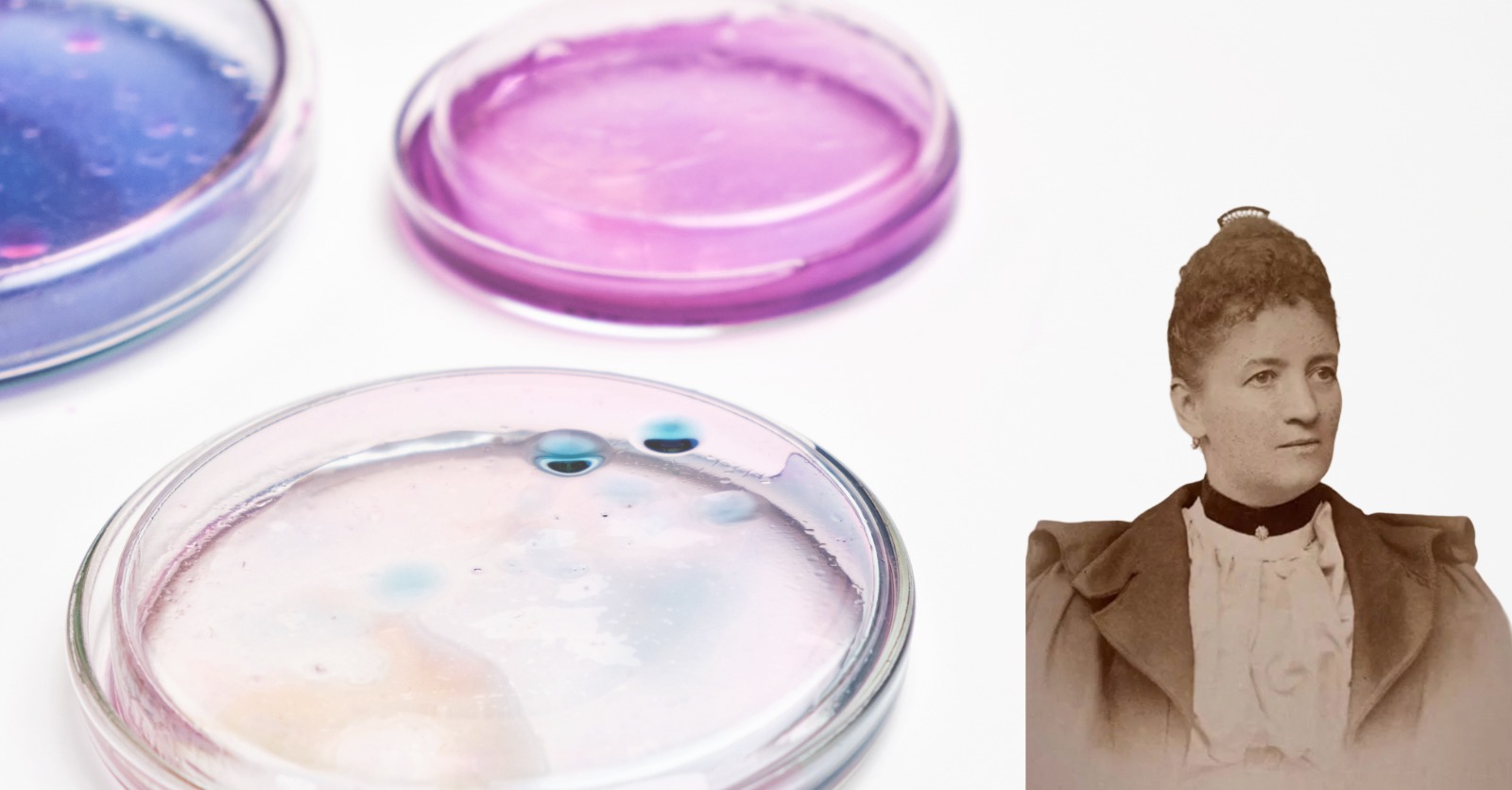
The Woman Behind Agar: Celebrating Women in Science
Did you know that one of the most important breakthroughs in microbiology was made possible by a woman?
On the International Day of Women and Girls in Science, we commemorate the legacy of Fanny Angelina Hesse, whose contribution transformed laboratory science forever.
Born in 1850, Fanny married German physician Walther Hesse in 1874. Shortly after, Walther began working in the laboratory of Robert Koch, later known as the father of microbiology and Nobel Prize laureate for his work on tuberculosis.
Although Fanny was never formally recognized as a scientist, she took an active interest in research and supported her husband’s work by illustrating bacterial cultures with remarkable precision, reflecting her growing expertise in bacteriology and microscopy.
Like many women of her time, Fanny balanced scientific collaboration with domestic responsibilities. It was precisely this combination of roles that led to a key scientific insight.
While Walther struggled with gelatin-based culture media—which melted with heat and degraded due to bacterial activity—Fanny recalled an ingredient she had long used in her kitchen: agar.
Having learned about agar from neighbors with experience in Southeast Asia, Fanny knew it could withstand high temperatures and remain stable. She suggested its use as a solidifying agent for culture media. Walther tested the idea, recognized its advantages, and shared it with Robert Koch.
Thanks to agar, Koch was able to successfully culture bacteria and, in 1882, demonstrate that tuberculosis was caused by a specific microorganism.
Despite the revolutionary impact of this discovery, Fanny Hesse was never credited when agar was introduced into microbiology.
Yet her intuitive knowledge laid the foundation for techniques still used in laboratories worldwide today.
On this International Day of Women and Girls in Science, we honor Fanny Hesse and all the women whose contributions shaped science, often without recognition.
Their legacy continues to inspire new generations of girls to pursue scientific curiosity, innovation, and discovery.